Discover
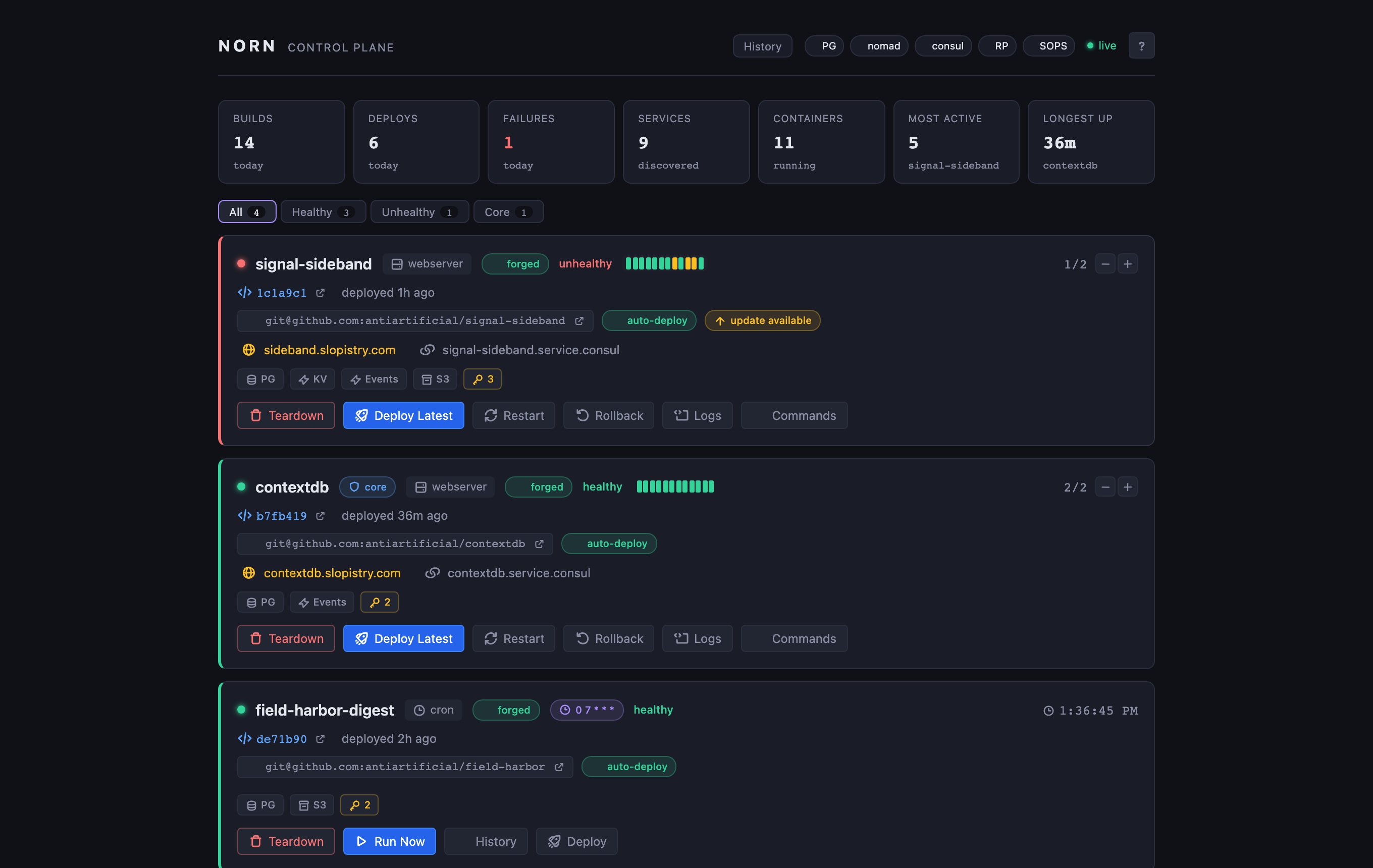
Scans deployable infraspec apps and shows health, endpoints, services, containers, secrets, snapshots, and metrics targets.
Rehearse and recover app changes, plan fleet capacity, and upgrade the platform without taking workloads down.
signal-sideband was the kind of app that makes a local platform earn its keep: one allocation stayed alive, the other kept restarting, and the fix needed a new image plus careful route and dependency handling. Norn turns that from a pile of tabs into one flow.
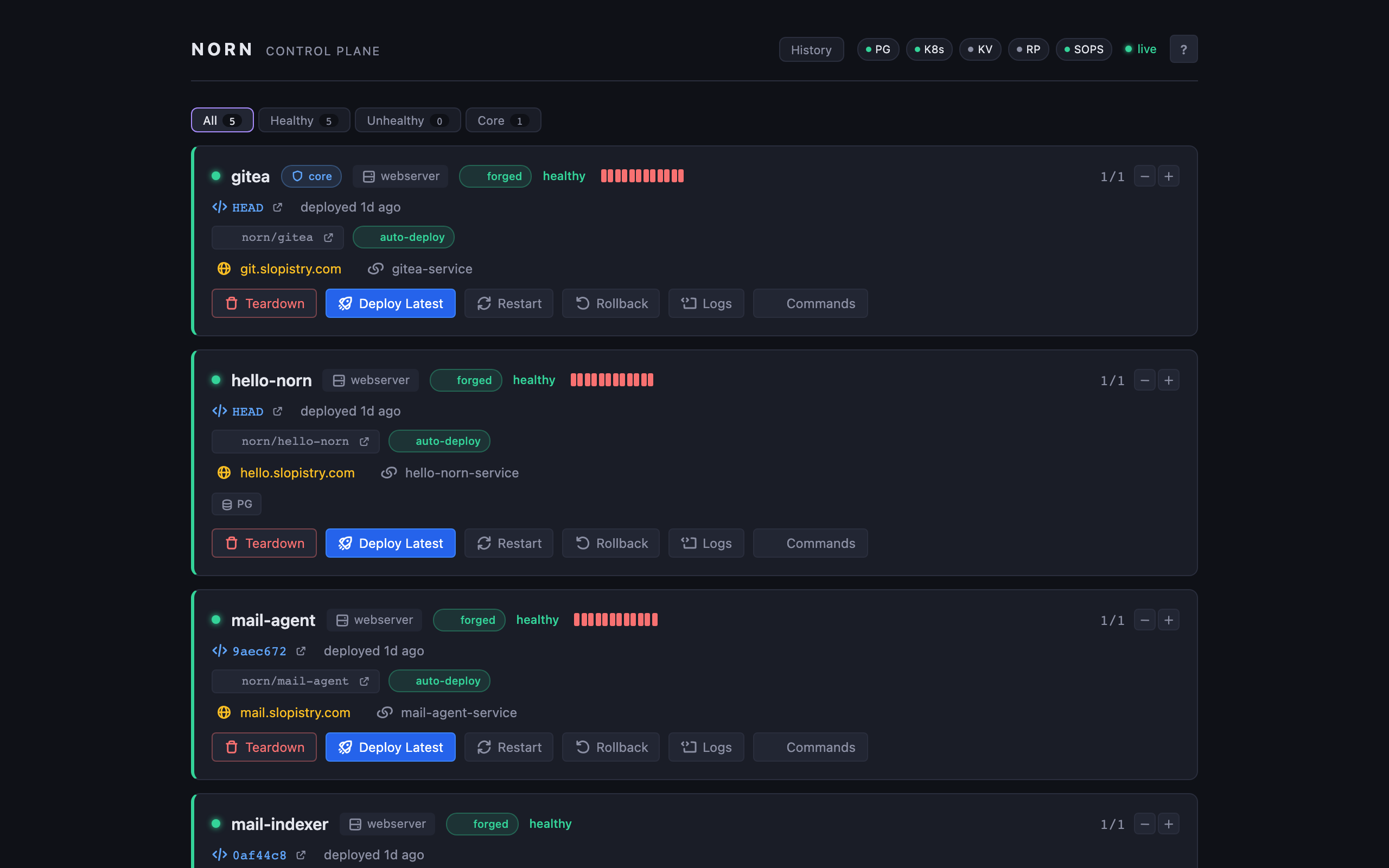
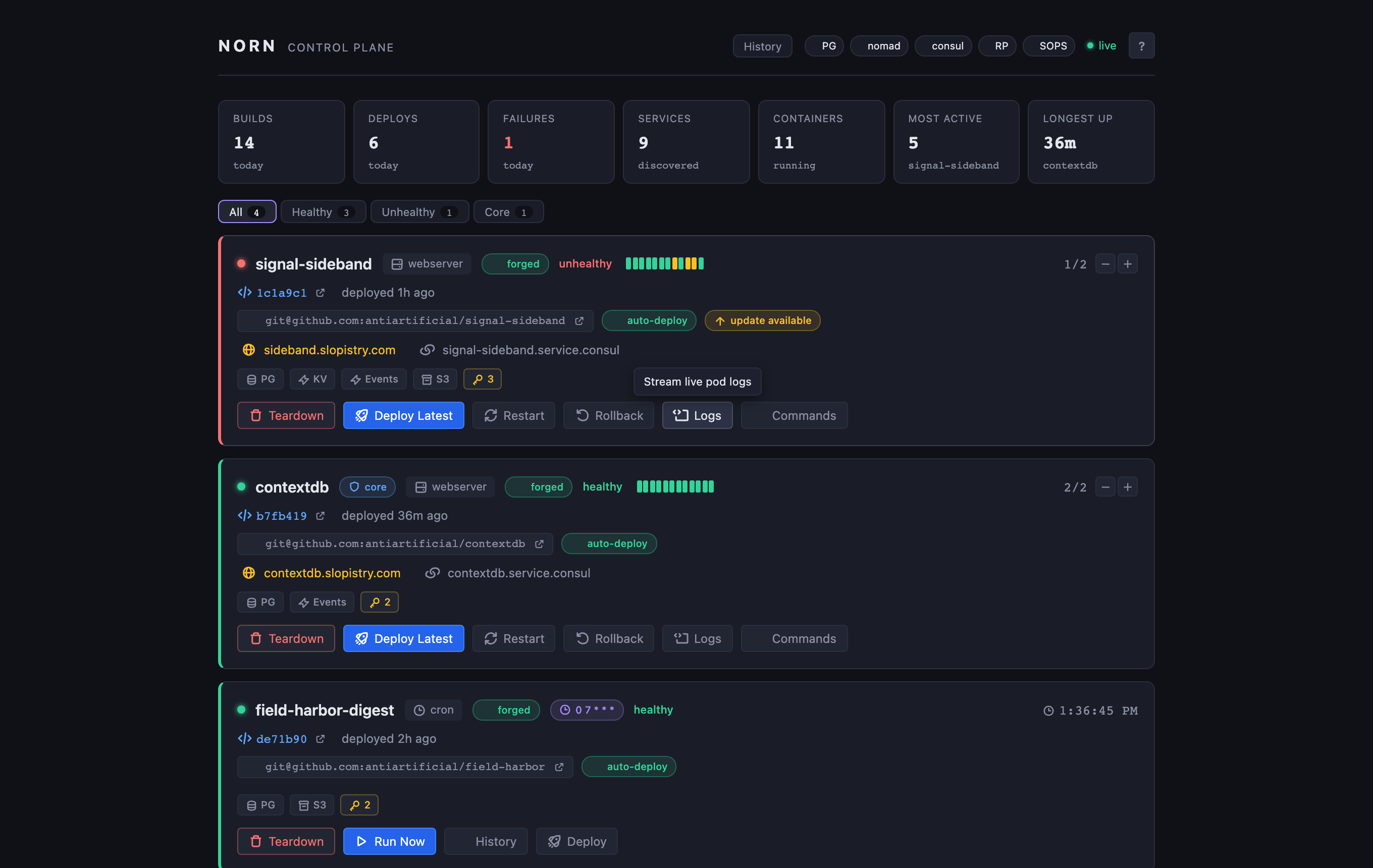
First, the Overview workspace puts fleet health, correlated incidents, active operations, recent deploys, and platform status in one place. From the Apps workspace, each service opens into its own overview, logs, deploys, snapshots, cron, functions, and shell tabs. It is not just "is a container running?" It answers what the service is, what it depends on, and what needs operator attention.
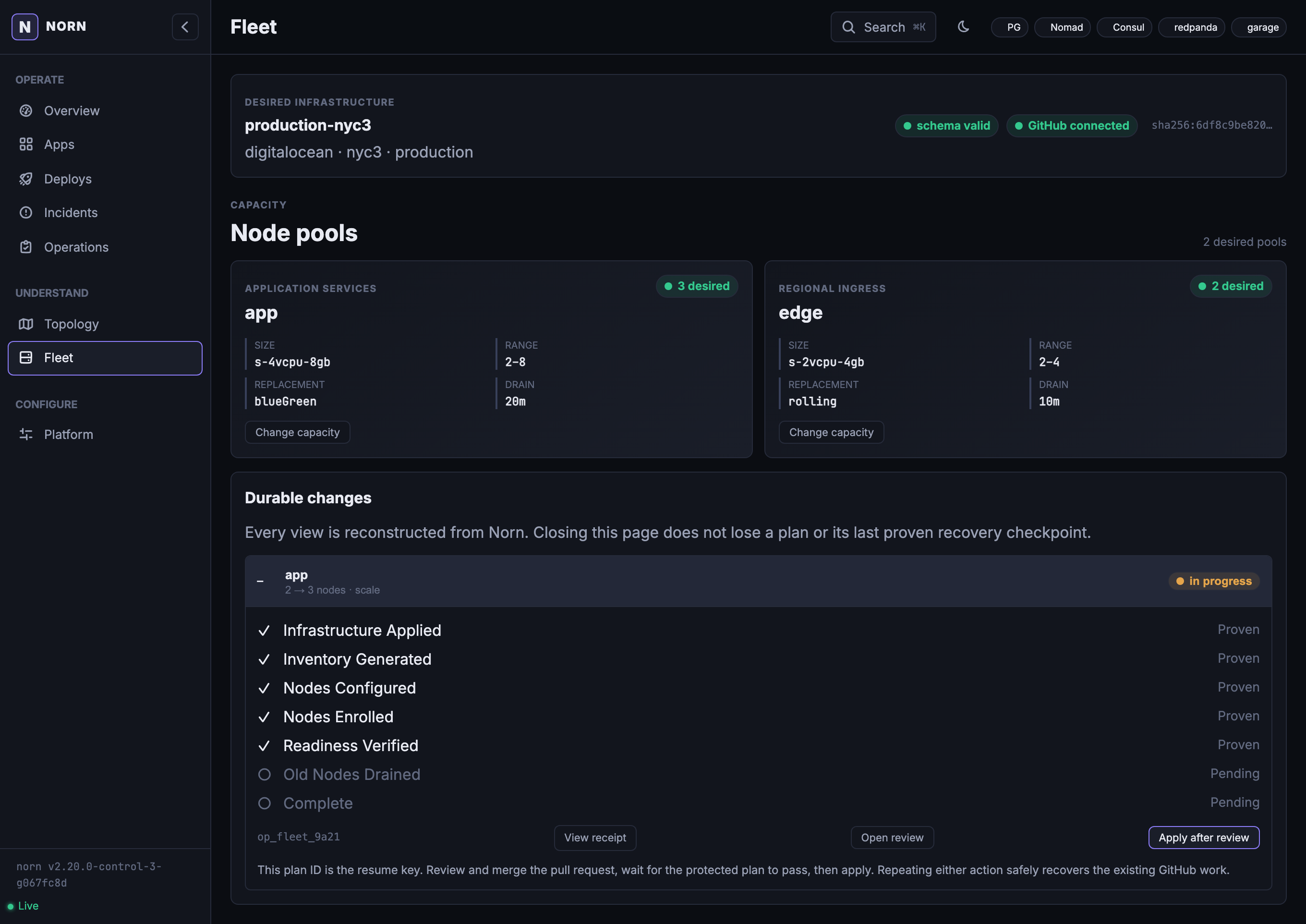
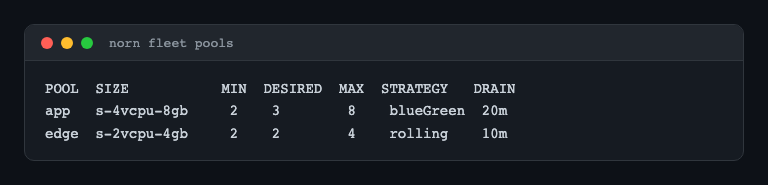
The Fleet workspace keeps infrastructure changes in that same operator story without moving cloud authority into Norn. It validates the private norn-fleet desired state, records a source-bound capacity plan, opens or recovers the deterministic GitHub review, and follows apply, enrollment, readiness, and drain checkpoints. Provider and Terraform state credentials stay inside the protected infrastructure runner.
Before touching runtime state, run a preflight:
norn preflight signal-sideband HEADPreflight goes through validation, source prep, Docker build, and tests. When the fix is ready, deploy queues into the same durable worker lane as webhooks and rollbacks:
norn deploy signal-sideband HEAD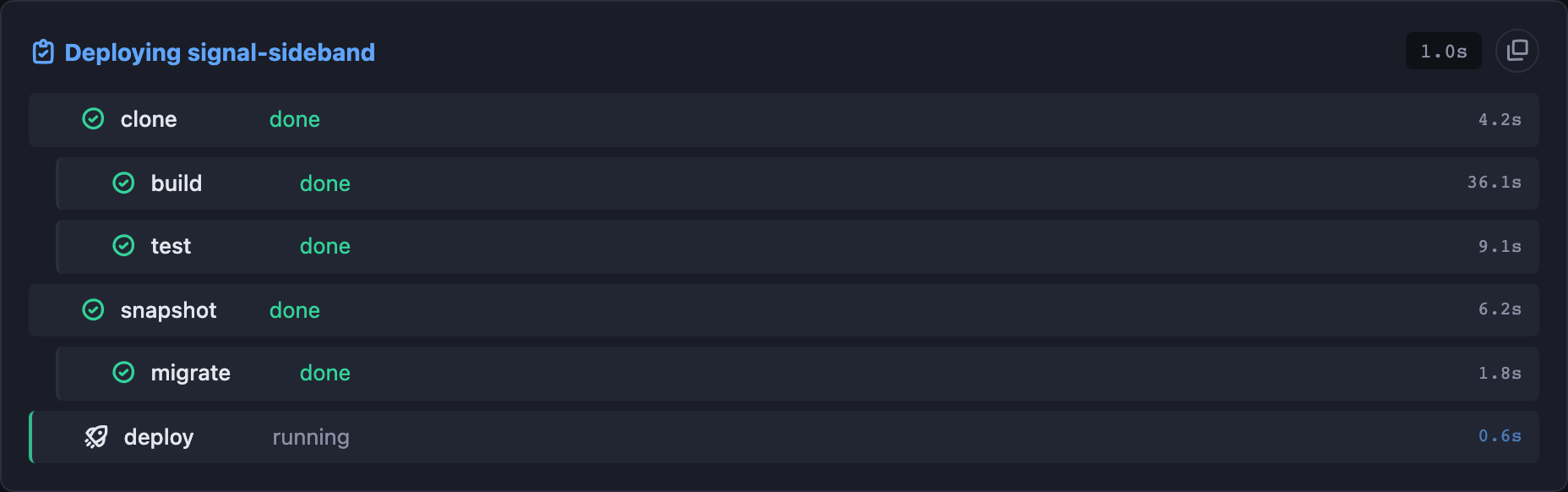
The live deploy panel and CLI both stream the pipeline. Norn records detailed stage evidence in deployment_steps, while the operations ledger stays compact enough for drain checks, metrics, and incident review.
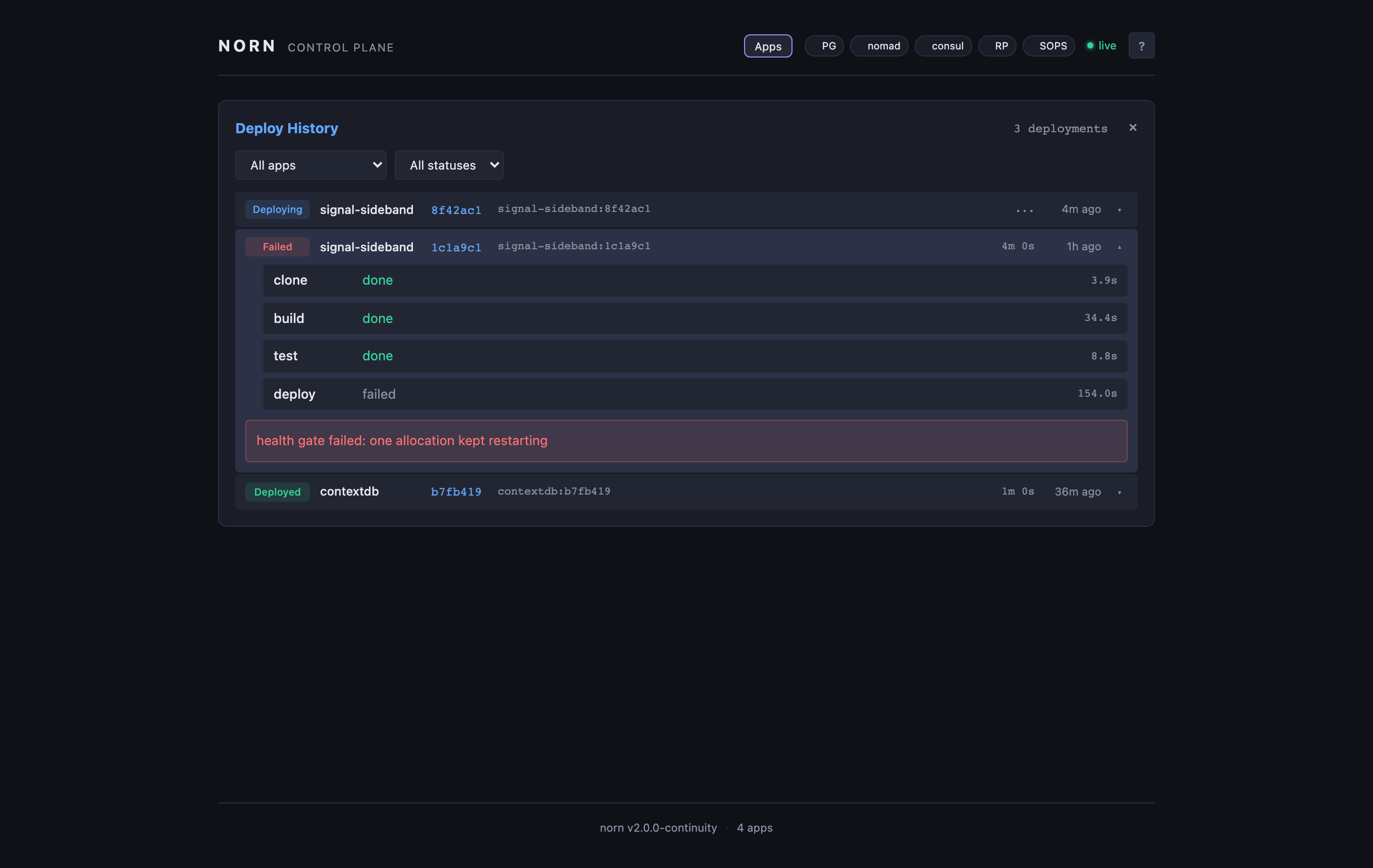
If an API restart interrupts read-only work, Norn can retry it. If a mutable stage has already started, such as snapshot, migration, Nomad submit, health, forge, or cleanup, Norn fails visibly for operator review instead of blindly replaying side effects.
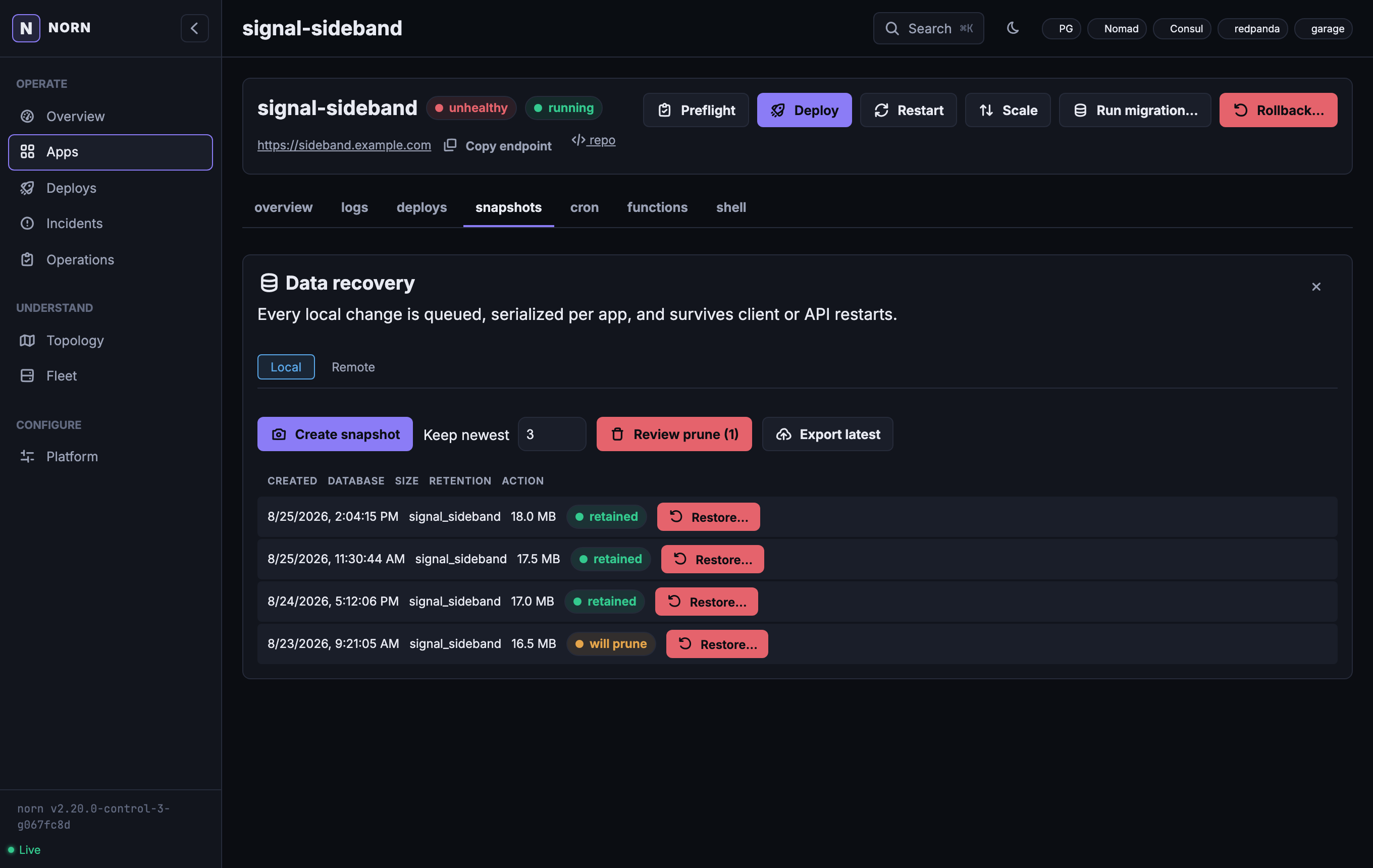
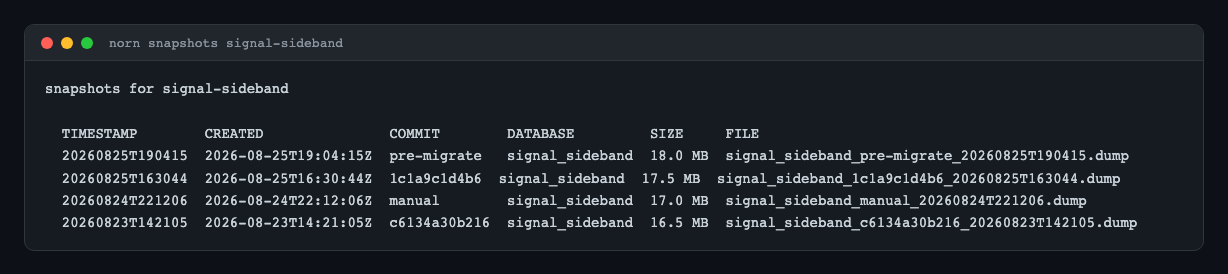
The same durable lane covers recovery outside a deploy. From an app's snapshot surface, an operator can create a snapshot, preview and confirm pruning, restore an exact inventory filename with a mandatory safety snapshot, run the declared schema migration independently, or roll back to the previous successful deployment. Request-bound idempotency keys reconnect browser and native clients to the original PostgreSQL receipt after a refresh, relaunch, or ambiguous response instead of duplicating the mutation.
Norn upgrades itself separately from the apps it runs. The platform lane builds a candidate release, checks it on an alternate port, promotes the release, and restarts only the Norn API process. Nomad, Consul, Postgres, Garage, Redpanda, and hosted app allocations keep running.
norn operations --active
release_sha=$(git rev-parse origin/master)
norn platform preflight "$release_sha"
norn platform upgrade "$release_sha"
norn platform rebuild "$release_sha" --verify
norn smoke platform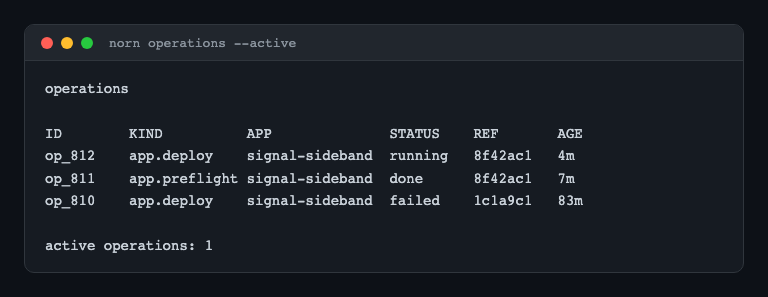
For proxy-fronted hosts, the same release path can switch a managed upstream instead of restarting launchd:
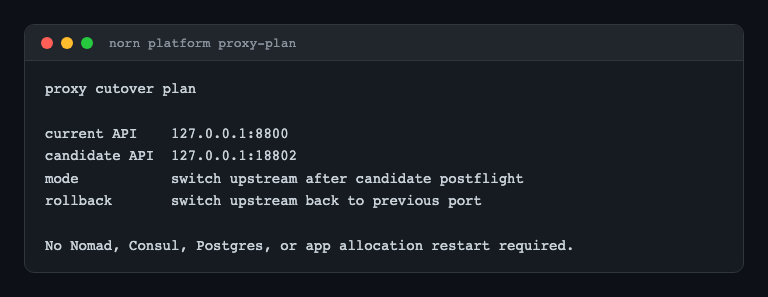
That gives the platform a clean answer to "can I upgrade Norn while this app is deploying?" Active operations are the drain source. Finished releases remain visible and rollbackable.
On macOS, the host lane restores Docker, Consul, Nomad, and the Norn API in dependency order. Recovery then runs bounded catch-ups and an explicit assurance policy. The same idempotent pass repeats every five minutes by default, so a restored Nomad database is not mistaken for a working public service.
norn host recover
norn host assure
norn host status
Assurance can deploy an explicitly required missing app, restart an unhealthy one, reconcile Cloudflare and Tailscale routes, and probe the entrypoints users actually reach. Persistent failures and recovery become correlated Beacon events. See Host Recovery and Assurance for the policy reference and safety boundaries.
Each app declares its needs in an infraspec.yaml: processes, ports, health checks, tests, services, secrets, migrations, volumes, cron schedules, functions, metrics, and endpoints. Norn reads the spec and coordinates the runtime pieces.
name: signal-sideband

repo:
  url: git@github.com:antiartificial/signal-sideband.git
  branch: main
  autoDeploy: true

build:
  dockerfile: Dockerfile
  test: go test ./...

processes:
  web:
    port: 8080
    command: ./sideband serve
    health:
      path: /healthz
    scaling:
      min: 2
    drain:
      signal: SIGTERM
      timeout: 30s
    metrics:
      enabled: true
      path: /metrics

  media-worker:
    command: ./sideband media-worker
    scaling:
      min: 1

infrastructure:
  postgres:
    database: signal_sideband
  kv:
    namespace: signal-sideband
  objectStorage:
    bucket: signal-sideband-media
  kafka:
    topics:
      - signal.received
      - signal.replayed

secrets:
  - SIGNAL_NUMBER
  - DATABASE_URL
  - GARAGE_ACCESS_KEY

endpoints:
  - url: https://sideband.example.com

volumes:
  - name: signal-sideband-media
    mount: /var/lib/signal-sideband
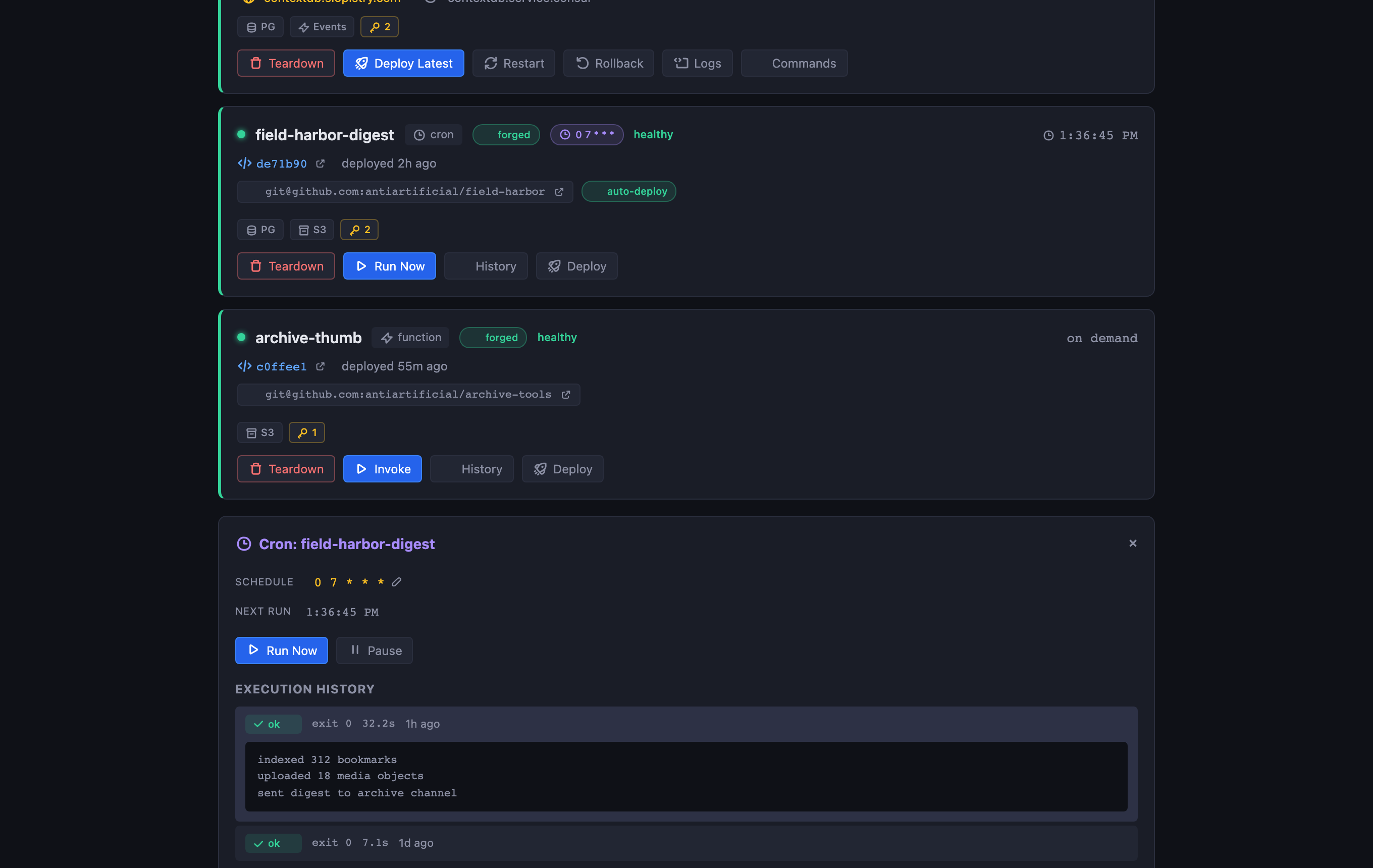
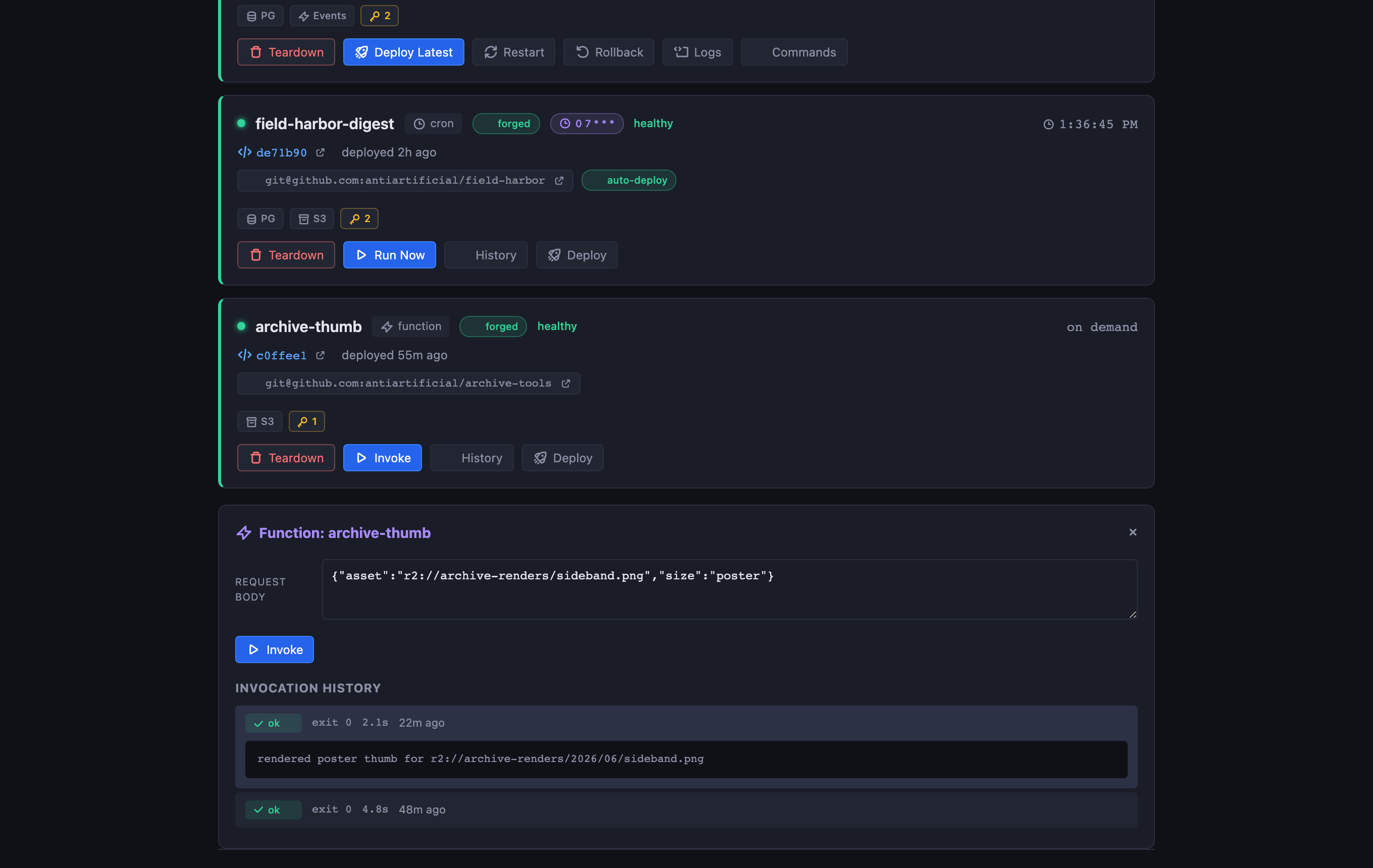
The same model covers web services, workers, cron, and functions:
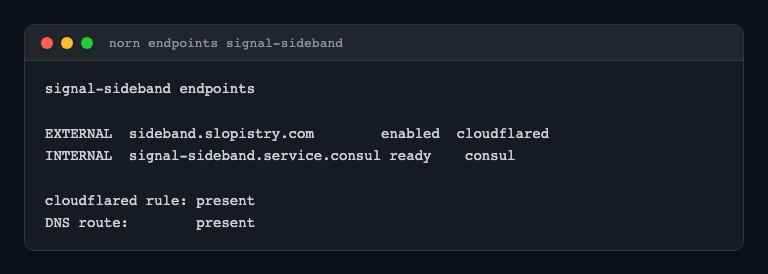
Routes are inspectable before and after deployment:
When the fix is not obvious, the operator surfaces stay close:
norn status
norn app signal-sideband
norn preflight signal-sideband HEAD
norn deploy signal-sideband HEAD
norn deploy steps <deployment-id>
norn operations --active
norn events --app signal-sideband
norn endpoints signal-sideband
norn platform proxy-plan
norn smoke platform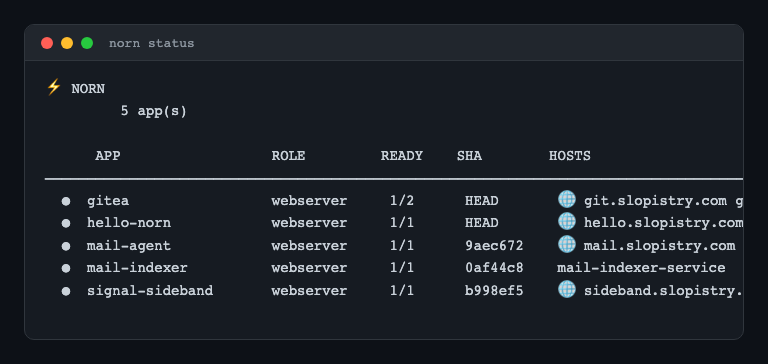
Norn is local-first infrastructure with enough memory to be trusted: specs declare intent, workers execute operations, stages leave evidence, upgrades respect active work, and the dashboard/CLI tell the same story.